
Lab of Systems Biology and Medicine

Lab of Systems Biology and Medicine

Seoul National University
Lab of Systems Biology and Medicine

Lab of Systems Biology and Medicine

Seoul National University
Lab of Systems Biology and Medicine

Lab of Systems Biology and Medicine

Seoul National University

News & Notice+ more

Publications+ more

(2025) Elucidation of molecular basis of osteolytic bone lesions in advanced multiple myeloma, Haematologica
(2024) Single-cell transcriptomic analysis identifies dynamic activation of cellular signaling pathways instructing beige adipogenesis, Experimental & Molecular Medicine
(2024) Targeted deletion of CD244 on monocytes promotes differentiation into anti-tumorigenic macrophages and potentiates PD-L1 blockade in melanoma, Molecular Cancer
(2024) Angiogenesis-on-a-chip coupled with single-cell RNA sequencing reveals spatially differential activations of autophagy along angiogenic sprouts, Nature Communications
(2023) Identification of MYH9 as a key regulator for synoviocyte migration and invasion through secretome profiling, Annals of the Rheumatic Diseases
(2023) DDM1-mediated gene body DNA methylation is associated with inducible activation of defense-related genes in Arabidopsis, Genome Biology
(2022) Proteogenomic landscape of human pancreatic ductal adenocarcinoma in an Asian population reveals tumor cell-enriched and immune-rich subtypes, Nature Cancer
(2022) Aβ-induced mitochondrial dysfunction in neural progenitor controls KDM5A for neuronal differentiation, Exp Mol Med
(2020) Cytosolic calcium regulates cytoplasmic accumulation of TDP-43 through Calpain-A and Importin α3, eLife
(2020) RUNX3 methylation drives hypoxia-induced cell proliferation and antiapoptosis in early tumorigenesis, Cell Death & Differentiation

Welcome to the
"Lab of Systems Biology and Medicine"

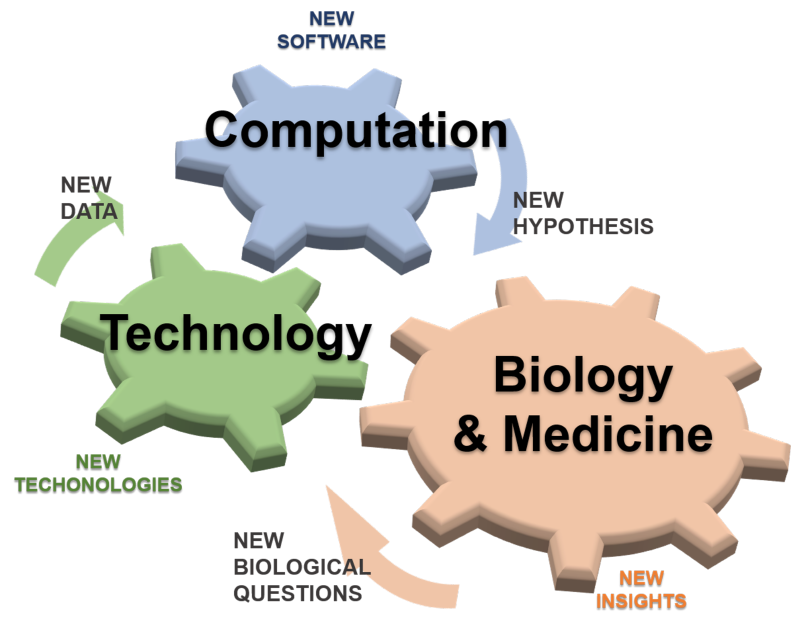
Our lab aims to develop systems biology approaches to prioritize key relevant information for diagnosis and therapy of refractory diseases (cancer, cardiovascular disease, diabetes, auto-immune disease, neurodegenerative disease, etc.) from global omics (genomics, proteomics, metabolomics, etc.) data. Such key relevant information includes diagnostic/therapeutic molecular targets for refractory diseases or signaling/transcriptional/epigenetic regulators or pathways underlying molecular mechanisms for biological phenomena. Recently, we are developing a big omics data-based network model that can be used for precision medicine. Specifically, we have been mapping gene/transcript/protein information from all genomic and proteomic data generated from 14 major cancers with good quality into a multi-layered network model. This network model represents associations among molecules across multiple information domains (mutation, epigenetic modification, mRNA/protein abundance, protein modification, etc.). By analyzing this multi-layered network model, we can identify cellular pathways (called network modules) that can govern operation of the network model in association with prognosis and survival of patients. Genomic and proteomic information from individual patients are be then spanned by the key network modules in the network model. For a patient for whom a doctor cannot determine an optimal therapeutic option, we can search for a set of patients with similar clinical symptoms to those of the patient, and these patients can be prioritized based on activities of these key network modules. The patient can be then treated with the therapeutic option used for the top patients identified through the prioritization. The multi-layered network model can thus serve as a useful tool to facilitate the success of precision medicine.